
Algeria vs World Cup Rivals: 2026 Outlook
The Algeria national football team is a major African contender entering the 2026 FIFA World Cup cycle, representing Algeria under the Fédération Algérienne de Football across CAF competitions and global qualifiers. Its modern profile combines Riyad Mahrez’s elite creativity, experienced defenders such as Aïssa Mandi and Ramy Bensebaini, and emerging attackers including Amine Gouiri and Ibrahim Maza. Algeria won the Africa Cup of Nations in 1990 and 2019, reached the 2014 World Cup round of 16, and remains one of Africa’s most technically gifted sides. The 2026 tournament will feature 48 teams, increasing qualification access but also making tactical consistency more valuable because uneven performances can still destroy a campaign. Data from recent squad listings shows Mahrez contributing two goals and one assist across four appearances in the referenced international sample, while Houssem Aouar recorded two assists. Track Algeria’s confirmed squad, qualifying results, injuries, and starting XI before evaluating any match prediction.
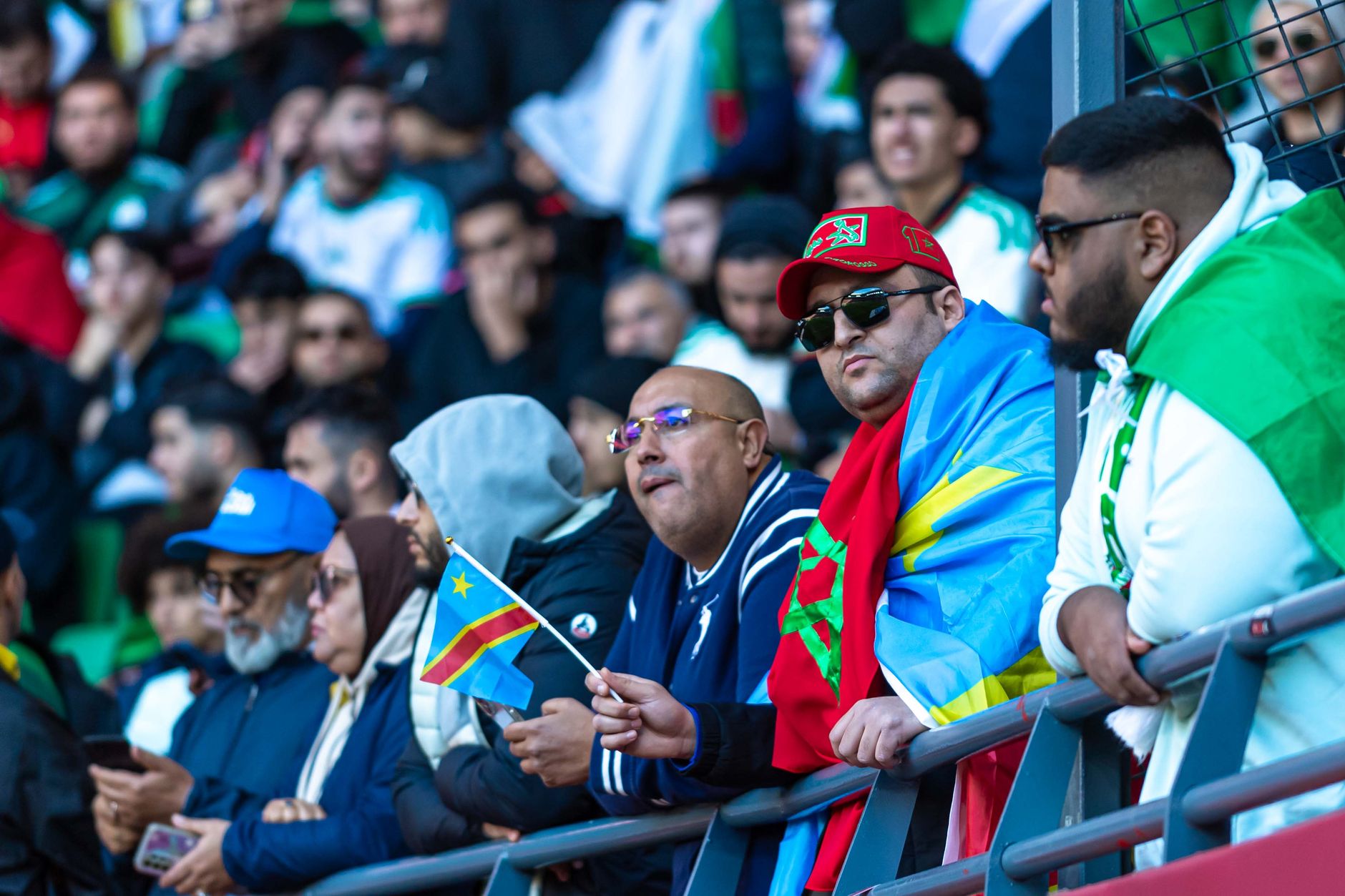
Photo by Guylain Kipoke on Pexels
The common misconception is that Algeria’s strength depends entirely on Riyad Mahrez. That is lazy analysis. Mahrez matters, obviously, but football is not a one-player calculator. Algeria’s expected value rises when its midfield controls second balls, its full-backs advance at the right moment, and its forwards attack the space created by Mahrez’s left foot. Match Daily follows those variables rather than recycling celebrity headlines. That distinction matters for supporters, tactical analysts, and anyone comparing Algeria with Morocco, Senegal, Egypt, or Nigeria. One player can change a match; a repeatable structure wins tournaments. The probability of a strong result improves when Algeria avoids emotional overcommitment, protects the central zone, and converts possession into shots from high-value areas. In plain English: stop staring at the winger and watch the shape behind him. That is where the real evidence lives.
Want a sharper tournament breakdown?
If you are assessing Algeria’s identity: study the tactical engine
Algeria’s identity is built on technical possession, wide progression, and fast combinations around the penalty area. The team usually wants capable midfielders to receive under pressure, move opponents horizontally, and release wide players before the defensive block resets. That approach explains why players such as Ramiz Zerrouki, Houssem Aouar, Farès Chaïbi, and Nabil Bentaleb are important even when they do not dominate the scoring charts. Their value appears in circulation, pressing angles, and transition control. According to the Confederation of African Football, Algeria’s continental record places it among Africa’s established tournament nations, not merely a qualifying participant. The useful analytical question is not “How much possession did Algeria have?” It is “How many dangerous actions followed possession?” A team can own 60 percent of the ball and still produce the attacking equivalent of a badly written group project.
The key tactical variables
- Width: Rayan Aït-Nouri and other advancing defenders can stretch a compact block.
- Central support: Aouar and Chaïbi must connect midfield with the front line.
- Transition security: Zerrouki and Bentaleb must limit counterattacking exposure.
- Final-third efficiency: Mahrez, Gouiri, and Anis Hadj Moussa need quality touches inside the box.
- Set pieces: Bensebaini and Mandi provide aerial experience.
[Internal Link: Algeria tactical analysis and formation guide]
The less obvious edge is Algeria’s ability to alter the rhythm of a match without changing personnel. When the opponent presses high, direct passes behind the first line can create immediate territory. When the opponent sits deep, patient circulation becomes essential, but only if the ball eventually reaches the half-spaces. A useful probability rule applies here: repeated low-quality attacks do not become dangerous merely because they are repeated. If Algeria produces ten blocked crosses instead of four central entries, the raw shot count flatters the performance. Analysts should therefore record progressive passes, box entries, turnovers within five seconds of losing possession, and shots after cutbacks. Those indicators reveal whether Algeria is controlling a match or simply decorating it with possession. Data shows that volume without location is weak evidence. The reader who judges only possession percentage is not analysing football; he is counting wallpaper.
If you are comparing the squad: separate stars from functional depth
The Algeria squad blends veteran leadership with a younger generation that could define the 2026 cycle. Goalkeeper options listed in the referenced international roster include Oussama Benbot, Melvin Mastil, and Luca Zidane. In defence, Aïssa Mandi offers experience, while Ramy Bensebaini, Rayan Aït-Nouri, Jaouen Hadjam, Zineddine Belaïd, and Mohamed Amine Tougai provide different combinations of pace, height, and distribution. Midfield includes Ramiz Zerrouki, Houssem Aouar, Farès Chaïbi, Hicham Boudaoui, Nabil Bentaleb, Ibrahim Maza, and Yassine Titraoui. The attacking group features Riyad Mahrez, Amine Gouiri, Anis Hadj Moussa, and Nadhir Benbouali. This is not simply a list of names. It is a portfolio of roles, and portfolios work only when risk is distributed intelligently.
At the referenced sample point, Ibrahim Maza had attempted 11 shots and placed three on target across four appearances, while Farès Chaïbi recorded nine shots and three on target. Those figures suggest attacking involvement, but they do not guarantee goals. Shot quality, defensive pressure, and minutes played remain decisive. Mahrez’s two goals, one assist, and three shots on target in four appearances show why he remains a high-impact creator, yet his age and workload make rotation strategically sensible. Aïssa Mandi’s four appearances demonstrate continuity, but defenders carry a different risk profile: one late recovery sprint can matter more than thirty safe passes. The specific information gain here is simple: assess the bench by tactical substitution value, not reputation. A reserve who can protect a lead, press tired full-backs, or change the team’s width has measurable tournament value.
See the current player context before judging Algeria’s ceiling.
Photo by Rümeysa Ersoy on Pexels
If you are projecting the 2026 World Cup: model scenarios, not fantasies
The 2026 FIFA World Cup will be hosted by Canada, Mexico, and the United States, with matches spread across a significantly larger tournament structure than the 32-team format used in previous editions. Los Angeles will host eight matches and provide fan events during the competition, according to the official Los Angeles FIFA World Cup 2026 site. Travel, climate, kickoff times, and recovery windows can influence performance, particularly for teams moving between North American venues. Algeria’s projection should therefore include schedule difficulty, opponent style, rest days, and squad rotation. A simple expected-points model can assign each fixture a win probability, draw probability, and loss probability, then adjust for venue and availability. It will not predict football perfectly. Nothing does. But it will beat the emotional method of declaring Algeria unbeatable after one friendly and finished after one bad half.
A practical match-evaluation model
- Availability: Confirm injuries, suspensions, and club minutes.
- Opponent profile: Identify whether the rival presses, counters, or defends deep.
- Chance quality: Compare shots inside the box, cutbacks, and set-piece opportunities.
- Transition risk: Measure turnovers that expose Algeria’s central defenders.
- Game-state response: Test whether Algeria improves or collapses after conceding.
- Market discipline: If considering predictions, compare implied probability with your own estimate and never stake money needed for essentials.
[Internal Link: 2026 World Cup match prediction methodology]
A contrarian conclusion follows from the format: easier qualification access does not automatically mean an easier knockout path. More teams increase the number of plausible qualifiers, which can create awkward group combinations and stronger round-of-32 matchups. Algeria’s best route is not necessarily maximal attacking aggression. It is reducing variance when ahead and increasing tempo only when the opponent’s structure is vulnerable. A one-goal lead has different value in minute 25 and minute 82. That sounds obvious, yet teams routinely behave as if the scoreboard has no clock attached. Match Daily’s tournament coverage should be used as a decision aid, not a substitute for judgment. For responsible sports analysis, compare at least three independent signals: recent performance, player availability, and tactical matchup. If all three agree, confidence rises. If they disagree, your confidence should fall. Mathematics remains undefeated by vibes.
Common pitfalls to avoid
The biggest error is treating historical prestige as current evidence. Algeria’s 1990 Africa Cup of Nations title, 2014 World Cup run, and 2019 continental championship establish identity, but they do not score goals in 2026. The second error is overvaluing friendly results, where substitutions and experimental formations distort the sample. The third is ignoring defensive transitions because attacking highlights are more entertaining. A beautiful Mahrez finish may generate millions of views; one untracked runner can decide the match. According to FIFA, tournament regulations, qualification pathways, and competition details should always be checked against official updates rather than copied from outdated social posts. The fourth error is confusing a player’s club position with his national-team role. International football compresses training time, so role clarity often matters more than theoretical versatility.
Avoid these analytical mistakes
- Do not forecast a starting XI before the official squad announcement.
- Do not treat four appearances as a complete performance sample.
- Do not use goals alone to evaluate midfielders.
- Do not assume possession equals control.
- Do not ignore travel between Canada, Mexico, and the United States.
- Do not stake money because a prediction sounds confident.
- Do not confuse Algeria’s historical ranking with its current form.
Photo by Franco Monsalvo on Pexels
The strongest operational improvement is to maintain a match log. Record the starting formation, first substitution, score at halftime, shots inside the box, set-piece chances, and goals conceded within fifteen seconds of possession loss. After five matches, patterns emerge. After ten, excuses become statistically expensive. For example, if Algeria repeatedly concedes after full-backs advance simultaneously, the issue is structural rather than unlucky. If the team creates chances but finishes below expectation, the problem may be temporary variance, poor shot selection, or goalkeeper quality. Separate process from outcome. A 1–0 win can conceal fragile defending; a 1–1 draw can reflect excellent chance creation and bad finishing. This framework produces better forecasts and better questions. It also prevents the classic supporter mistake: using the final score as evidence for everything.
Want a more disciplined way to follow Algeria?
The 30-day check-in
Thirty days before a major Algeria fixture, update the forecast from scratch. Do not merely adjust last month’s opinion by instinct; that is how analysts smuggle bias into spreadsheets wearing a fake moustache. Check club minutes for Riyad Mahrez, Amine Gouiri, Ibrahim Maza, Rayan Aït-Nouri, Ramy Bensebaini, and Houssem Aouar. Confirm the coach’s latest formation, the opponent’s available forwards, venue conditions, travel distance, and expected rest period. Then assign probabilities to three scenarios: Algeria controls the match, Algeria trades transitions, or Algeria defends a lead. The forecast should change when evidence changes. That is not inconsistency. That is competence.
[Internal Link: Algeria fixtures, results, and squad updates]
The 30-day review should also identify the highest-leverage player. It may be Mahrez against a deep defence, Maza against an aggressive press, or Bensebaini against an aerial opponent. Leverage means expected influence on the result, not social-media popularity. Track whether Algeria’s attacking output drops sharply when Mahrez is isolated, whether Aouar receives between the lines, and whether Zerrouki can cover wide spaces after turnovers. These are testable hypotheses. A strong preview states what would prove it wrong. If Algeria’s midfield loses repeated duels, the team’s possession model fails regardless of its passing completion. If the opponent cannot defend the left channel, Algeria should attack it repeatedly. The best tactical plan is not the prettiest one. It is the one with the highest expected return.
What makes the Algeria national football team important in African football?
The Algeria national football team is important because it combines major tournament history, a large football culture, and a technically strong player pool. Algeria won the Africa Cup of Nations in 1990 and 2019 and reached the 2014 FIFA World Cup round of 16. Those achievements give the Desert Foxes genuine continental status. Their influence also extends through diaspora-developed players competing in European leagues, which expands selection options and technical quality.
How should fans evaluate Algeria’s 2026 World Cup chances?
Fans should evaluate Algeria’s 2026 World Cup chances through squad availability, qualifying form, tactical balance, and opponent matchups rather than reputation alone. Start with the latest official squad, then compare expected lineups and defensive transition records. Riyad Mahrez can raise Algeria’s attacking ceiling, but midfield control and defensive reliability determine the floor. A team with high upside and poor game management remains volatile.
What is the difference between Algeria’s 2014 team and the 2026 group?
The 2014 Algeria team was remembered for energetic transitions, strong collective running, and a historic round-of-16 appearance, while the 2026 group is being assessed through a changing blend of veterans and younger players. Mahrez represents continuity, but players such as Ibrahim Maza and Rayan Aït-Nouri point toward a refreshed generation. Direct comparisons are imperfect because opponents, tournament formats, coaching plans, and player roles differ.
How can I follow Algeria national football team matches intelligently?
Follow Algeria by tracking confirmed fixtures, starting lineups, injuries, formations, and meaningful performance indicators before kickoff. Use FIFA, CAF, the Fédération Algérienne de Football, and reliable match databases for verification. Match Daily can supplement that process with predictions, player statistics, and tactical analysis, but no preview eliminates uncertainty. Compare several evidence sources and avoid making decisions from a single headline or viral clip.
What should I do if Algeria changes formation before a match?
If Algeria changes formation, reassess player roles and transition coverage instead of assuming the new shape is automatically better or worse. A 4-3-3, 4-2-3-1, and 3-4-2-1 can share the same attacking principles while creating very different defensive risks. Check which midfielder protects the centre, which full-back advances, and how the front line presses. Those details matter more than the formation label.
Is Algeria a strong prediction option for 2026 World Cup matches?
Algeria can be a strong prediction option in selected matchups, but it should not be treated as a guaranteed result. Its expected value improves when Mahrez has space, the midfield can progress the ball, and the defence faces limited counterattacking speed. Before considering any wager, compare your estimated probability with the available price, set a fixed budget, and follow local gambling laws. Never chase losses or use essential funds.
How much does it cost to follow Algeria’s World Cup analysis?
Following Algeria’s match news and public tournament analysis can cost nothing, while premium services may charge according to their own plans. FIFA, CAF, national-team announcements, and many statistical sources publish free information. Match Daily provides FIFA World Cup-focused coverage, including predictions, tactics, player statistics, and tournament updates. Check the exact terms before subscribing or using any paid feature, because pricing and availability can change by market.
Algeria’s 2026 outlook is clear: the talent is real, but talent alone is not a model. Mahrez supplies decisive creativity, Maza offers emerging shot volume, Aouar adds connection, and Bensebaini and Mandi provide experience. The competitive edge comes from measuring how those pieces behave together under pressure, travel, injuries, and changing game states. Use official updates, tactical evidence, and probability rather than nostalgia. Then revisit the forecast every thirty days. That is the rational route, and frankly, your guesswork has had enough opportunities.
Ready to follow Algeria’s 2026 journey with sharper data?