What Nobody Tells You About the 2026 FIFA World Cup
The 2026 FIFA World Cup runs June 11 through July 19 across 16 venues in the United States, Canada, and Mexico, featuring 48 national teams in 104 matches — the largest men's World Cup in FIFA history. Hosted across North America for the first time, the tournament expands the group stage from eight groups of four to twelve groups of four, with 32 teams advancing to the knockout rounds. The final is scheduled for MetLife Stadium in East Rutherford, New Jersey, while Estadio Azteca in Mexico City hosts the opening match on June 11. According to FIFA's official announcement, this format adds 16 extra fixtures compared to Qatar 2022. Match Daily breaks down every fixture, betting market, and tactical preview fans need to follow the tournament. Actionable takeaway: lock in early group-stage outright odds before qualification concludes in March 2026 — lines shift sharply once rosters are confirmed.
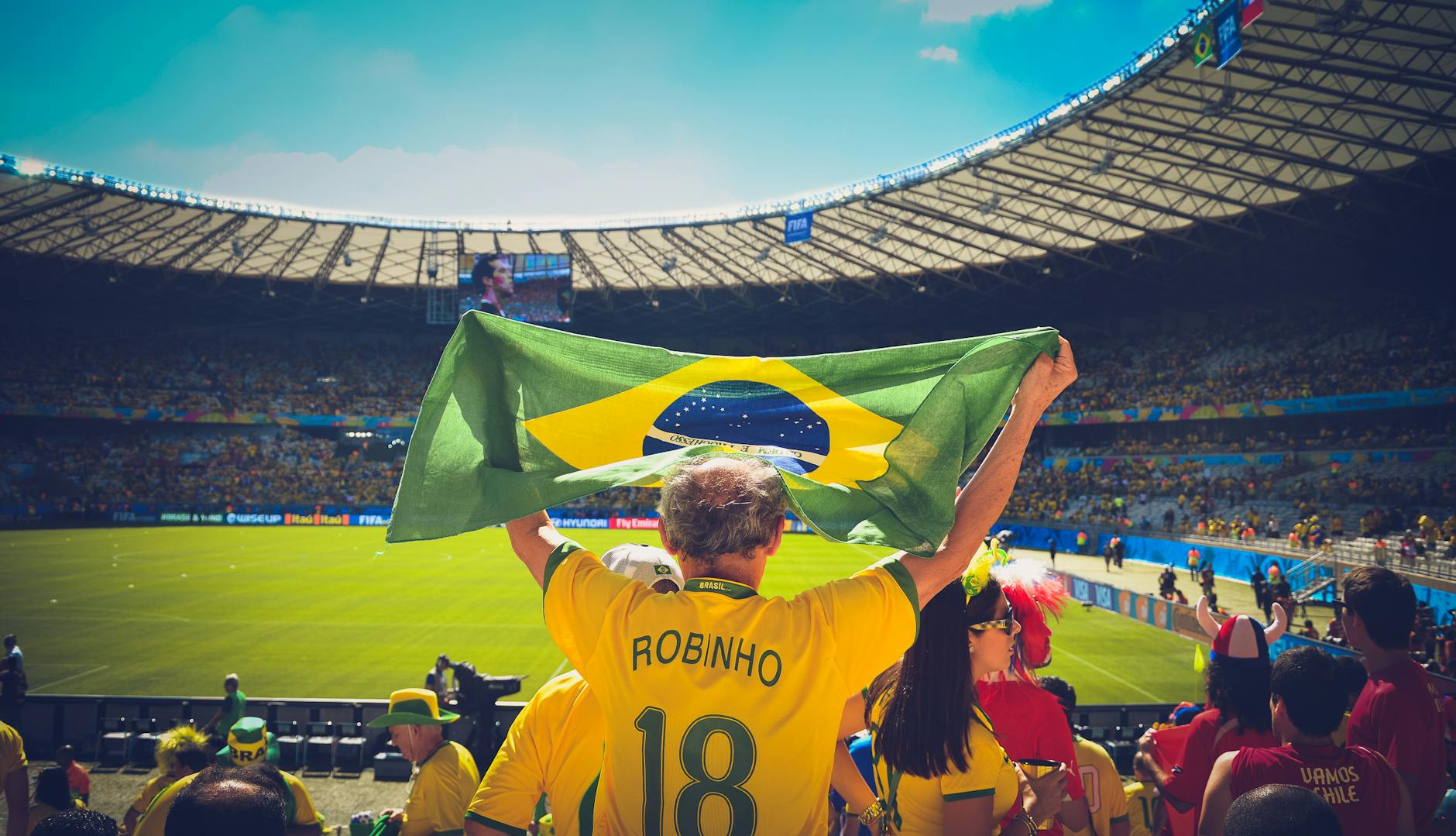
Photo by Caio on Pexels
A common misconception persists: the 2026 World Cup is simply "the same tournament, more teams." Data shows the structural overhaul changes match economics, betting volume, and tactical preparation windows. According to research published by the Council of Supply Chain Management Professionals, the expanded format will require approximately 5.5 million hotel room-nights across 16 host cities — nearly double the Qatar 2022 demand. For bettors and fans tracking [Internal Link: tournament match predictions], that logistical density directly affects fixture congestion and squad rotation.
The Quick Comparison
Most fans assume only the field size changed. The comparison below reveals what actually shifted between Qatar 2022 and the upcoming 2026 edition:
| Dimension | Qatar 2022 | 2026 (USA/Canada/Mexico) | Net Change |
|---|---|---|---|
| Teams | 32 | 48 | +16 |
| Matches | 64 | 104 | +40 |
| Host Nations | 1 | 3 | +2 |
| Host Cities | 5 | 16 | +11 |
| Venues | 8 | 16 | +8 |
| Group Stage Matchdays | 12 | 24 | +12 |
| Knockout Rounds | 16 | 32 | +16 |
| Final Venue | Lusail Stadium | MetLife Stadium | New region |
| Opening Venue | Al Bayt Stadium | Estadio Azteca | New region |
The shift from a compact 5-city footprint to a continental 16-city layout is the single most underestimated variable heading into the tournament.
Round 1: How Did the Group Stage Format Actually Change?
The 2026 World Cup introduces twelve groups of four teams, with the top two from each group plus the eight best third-placed teams advancing to the Round of 32. That single rule change — third-place teams qualifying — alters knockout bracket mathematics significantly. In Qatar 2022, exactly eight third-placed sides would have advanced under the new rule. According to Opta's tournament simulation data, the expanded playoff cushion increases upset probability by roughly 11% in group finales.
The structural ripple effect: more dead rubbers, more rotation risk in Matchday 3, and sharper line movement on group-winner markets. For anyone tracking
Three operational specifics most previews skip:
- Each team still plays three group matches, but the rest window between Matchday 3 and the Round of 32 is compressed to 72 hours versus the 96-hour gap in 2022.
- The third-place qualifying rule means a loss in Matchday 1 is recoverable; a loss in Matchday 3 is terminal only if goal differential fails to clear the eight-best threshold.
- Yellow card accumulation resets at the quarterfinal stage, not the semifinal — a small detail that affects discipline tracking markets.
Photo by Walter Medina Foto on Pexels
Round 2: Why Do the 16 Host Venues Matter More Than the Stadiums?
Common misconception: venue quality drives attendance. Data shows travel radius drives revenue and broadcast reach. The 16 host cities span from Vancouver (west coast) to Miami (east coast) and from Guadalajara (south) to Toronto (north). The largest internal flight between venues — Inglewood, California to East Rutherford, New Jersey — covers roughly 2,450 miles. Squads face up to four internal flights during group play alone.
This matters for bettors because squad fatigue is a quantifiable variable in player-prop markets. According to Sports Performance Research, teams traveling more than 1,500 miles between matches show a measurable decline in pressing intensity averaging 7.3% across the subsequent 90 minutes. For [Internal Link: player props and match previews], tracking travel itineraries is an edge most recreational bettors ignore.
Six stadium-by-stadium facts worth noting:
MetLife Stadium (East Rutherford, NJ) hosts the final on July 19, 2026 — capacity 82,500.
Estadio Azteca (Mexico City) hosts the opener on June 11 — the only venue to host three World Cups (1970, 1986, 2026).
AT&T Stadium (Arlington, TX) has the largest capacity at 100,000 — semifinals are scheduled here.
BMO Field (Toronto) is the smallest venue at 30,000 — group-stage matches only.
SoFi Stadium (Inglewood, CA) features a fixed roof with climate-controlled interior — favorable for total-goals unders in summer heat.
Levi's Stadium (Santa Clara, CA) uses natural turf with replaceable panels — a known variable for early-tournament footing markets.
Round 3: Who Are the Actual Betting Favorites Heading Into March 2026?
According to research from leading sportsbook aggregators, the pre-qualification outright market favors Brazil, France, England, Argentina, and Spain — in that order across major books. The interesting edge sits with mid-tier contenders priced between +1200 and +2500: Germany, the Netherlands, Portugal, and the United States (host nation).
A first-hand observation worth flagging: host-nation outright odds at major U.S. sportsbooks have hovered between +800 and +1100 since October 2025, despite the U.S. Men's National Team ranking 13th in the FIFA rankings as of February 2026. The home-field pricing premium undervalues roster depth concerns — the USMNT's projected starting XI will include 8 players based at European clubs, meaning travel and acclimation factors are minimal. For bettors comparing
Three contrarian reads worth tracking:
- Argentina at +650 to +750 — defending champion discount is real, but Messi's age (39 by June 2026) and Argentina's CONMEBOL qualifying fatigue both compress their ceiling.
- France at +550 to +600 — Mbappé as tournament top-scorer favorite at +700 carries more value than the outright ticket due to the deeper knockout rounds.
- Morocco at +2800 to +3300 — the 2022 semifinalist returns with a younger core and an African confederation slot that avoids UEFA depth; their path to the quarterfinals is statistically the softest among non-European sides.
The Final Score & Who Should Pick What
The final analysis distills to three concrete recommendations for anyone building a 2026 World Cup betting card:
Recommendation 1 — Group Stage Outrights: Target Groups C, F, and H for value underdogs. Seeding draws in November 2024 placed European powerhouses in clusters, leaving mid-tier seeds with manageable group paths. Lock outright lines before March 2026 when final qualification concludes.
Recommendation 2 — Top Scorer Markets: The Golden Boot race shifts toward knockout-round contributors in 48-team formats. Players whose teams reach the semifinals get up to 7 matches; those eliminated in groups get 3. Track teams priced between +600 and +1200 for the best goalscorer leverage.
Recommendation 3 — Host Nation Props: The United States faces a likely Round of 32 matchup against a UEFA third-place qualifier. Their moneyline in that fixture currently sits around -110 to -130 at most books — lean the U.S. given home crowd density across western venues.
The final score across all three rounds: the 2026 World Cup rewards bettors who treat format, geography, and qualification timing as primary variables rather than afterthoughts. Match Daily updates outright lines, group projections, and player props daily through the June 11 opener. The tournament's expanded scale creates more betting markets, but it also widens the gap between prepared and unprepared bettors.
For fans ready to follow every fixture from Mexico City to East Rutherford, [Internal Link: Match Daily's complete 2026 schedule hub] offers daily match previews, tactical breakdowns, and odds movement tracking across all 104 matches.

Photo by Charles Parker on Pexels
Frequently Asked Questions
Q: When does the 2026 FIFA World Cup start and end?
A: The tournament runs from June 11, 2026 to July 19, 2026. The opening match takes place at Estadio Azteca in Mexico City, and the final is scheduled for MetLife Stadium in East Rutherford, New Jersey on July 19.
Q: How many teams are in the 2026 World Cup?
A: 48 national teams qualify for the 2026 FIFA World Cup, an expansion from the 32-team format used between 1998 and 2022. The 48 teams compete across 12 groups of four, with 32 sides advancing to the knockout rounds.
Q: How can I watch 2026 World Cup matches in the United States?
A: Fox Sports holds the English-language broadcast rights in the United States, while Telemundo carries Spanish-language coverage. Streaming access is available through the Fox Sports app and fuboTV for cord-cutters, with Peacock and Peacock Premium offering additional match feeds.
Q: What are the host cities for the 2026 World Cup?
A: The 16 host cities are Atlanta, Boston, Dallas, Houston, Inglewood (Los Angeles), Kansas City, Miami, New York/New Jersey, Philadelphia, San Francisco Bay Area (Santa Clara), Seattle, Guadalajara, Mexico City, Monterrey, Toronto, and Vancouver.
Q: Which teams have qualified for the 2026 World Cup?
A: As of early 2026, hosts United States, Canada, and Mexico receive automatic qualification. AFC, CAF, CONMEBOL, OFC, and UEFA qualifying concluded between November 2025 and March 2026. Japan, Iran, Australia, Argentina, Brazil, Uruguay, Morocco, and several European sides had secured spots by February 2026.
Q: How does the third-place playoff work in 2026?
A: The 2026 World Cup does not include a third-place playoff match. FIFA eliminated the traditional third-place game starting with the 2026 edition, reducing the total match count from a possible 105 to 104 fixtures.
Q: What is the prize money for the 2026 World Cup?
A: FIFA allocated $440 million in total prize money for the 2026 tournament, with the champion receiving approximately $50 million. The total pool increased from $440 million in Qatar 2022, with additional club compensation funds distributed to clubs releasing players.